
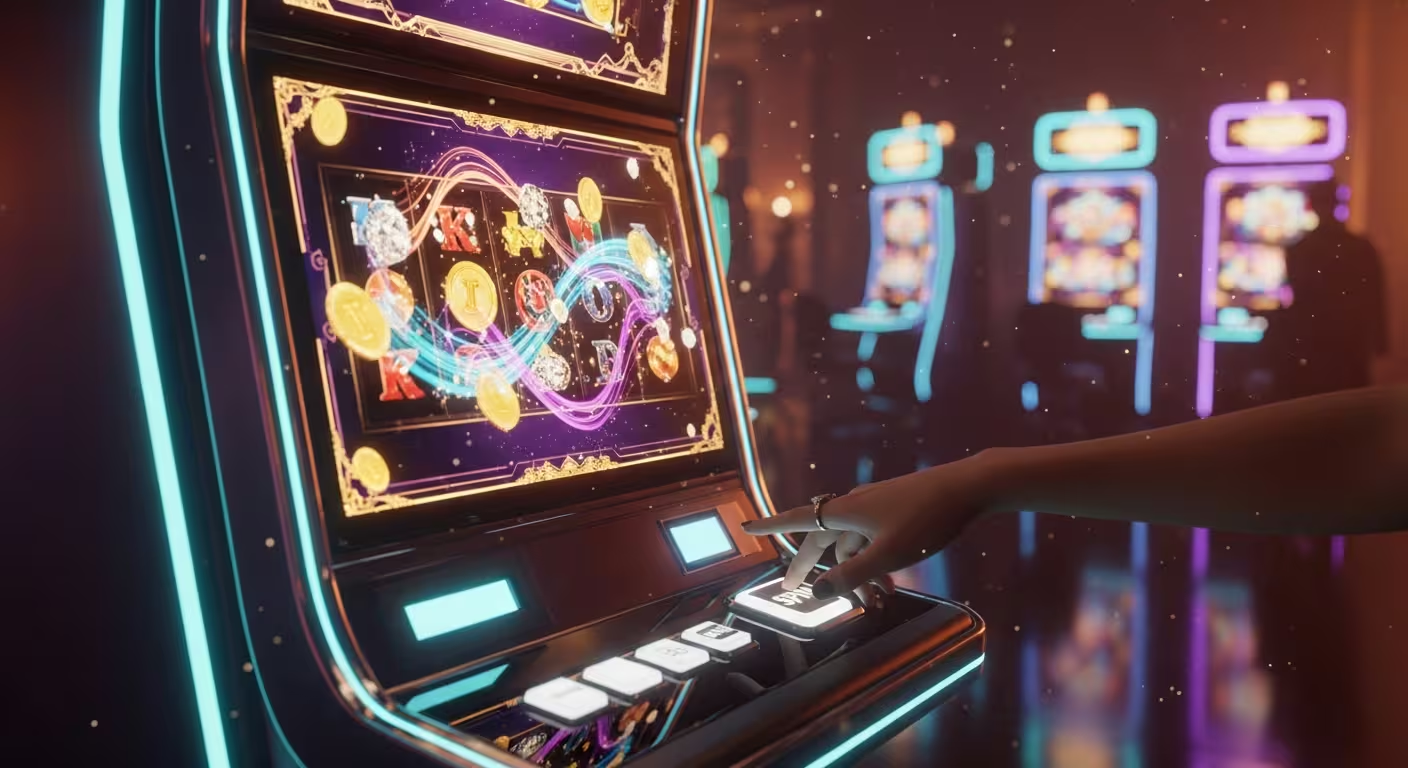
Online casinos personalise a great deal, and almost none of it is inside the game. The lobby reorders itself around what you have played, the offers in your inbox are chosen by segment, and a returning player sees a different front page from a new one. What stays identical for everyone is the part that decides money: the certified random number generator and the return-to-player configuration the game was approved with.
That line matters, because it is where most claims about “games that remember you” quietly cross from design into mathematics. It is worth knowing which side of it any given feature sits on.
What a casino can actually personalise
The operator holds your account data: session history, stake sizes, which titles you opened, deposits and withdrawals. From that it can order the lobby, mark “recently played”, recommend titles with a similar volatility profile, and target promotional messages. This is ordinary e-commerce personalisation and it works the same way a shop’s recommendation shelf does.
Inside the games there is a second, narrower kind: persistent progress. Some slots carry collection meters, unlockable bonus tiers or multi-stage features that remember where you left off. These are real, they are described in the paytable, and they are the same for every player — the progress is yours, the rules are not individual. Narrative-heavy titles such as rare mythology slots use that persistence to pace a quest rather than to change its odds.
What a recommendation never signals is an outcome. A game pushed to the top of your lobby is there because of commercial weight and your history, not because it is “ready”.
- Lobby order, “recently played” and recommended titles — driven by account history.
- Promotional messages and bonus eligibility — driven by player segment.
- Collection meters and unlockable features inside a game — identical rules for everyone, progress stored per account.
- Return-to-player, hit frequency and volatility — fixed in the certified configuration, never per player.
What cannot be personalised, and why
A slot is certified as a specific mathematical configuration. An accredited laboratory tests the generator for statistical randomness and confirms that the long-run return matches the declared figure. If a game adjusted that return for an individual, the certificate would no longer describe the game being played — which is precisely why no licensed studio does it.
There is one widely misunderstood exception, and it is not personalisation: many studios ship the same title in several return-to-player versions, and the operator chooses which to run. The figure differs between casinos, not between players, and the paytable of the version in force is where it is stated. Progressive jackpot games sit lower again, because part of every stake funds the pool instead of the base game.
The data side is worth a minute too. Verification documents, payment details and session logs sit with the operator, and in Europe a player can ask what is held and ask for it to be deleted, subject to the record-keeping the licence requires. The practical question to ask of any “personal” feature is simple: does it change what I see, or what I am paid? Features that react to history — including interactive slot characters — belong firmly in the first group. The cost of running all of this is a server question rather than a game one, and the energy footprint of an online casino is where that shows up.
| Element | Varies by player? | Where it is defined |
|---|---|---|
| Lobby order and recommendations | Yes | Operator’s own system |
| Promotional offers | Yes, by segment | Promotion terms |
| Collection meters, unlockables | Progress only | Game paytable |
| Return-to-player | No | Certified configuration |
| Random number generator | No | Laboratory certificate |
Can a slot really remember my previous sessions?
A game can store progress — a collection meter, a partly unlocked feature — against your account, and the casino can use your history to order the lobby and target offers. Neither of those changes the odds of the next spin.
Is my personal data used to decide what I am shown?
Yes, for recommendations and promotions: that is what account history is used for. Identity documents and payment data are held for verification and anti-money-laundering obligations, and in Europe you can request access or deletion within the limits the licence sets.
Could personalisation ever change my return-to-player?
Not in a licensed game. The return is part of the configuration an accredited laboratory certified, so altering it per player would invalidate the certificate. What does differ is which certified version an operator chose to run, and that is published in the paytable.

Comments 2
The privacy paragraph should be higher up the page. That was my first question, and it was answered halfway down.
A game that remembers my best night is lovely. A game that remembers my worst one is the part I would want control over.